What Should You Do If Your Roof Leaks During a Phoenix Monsoon?

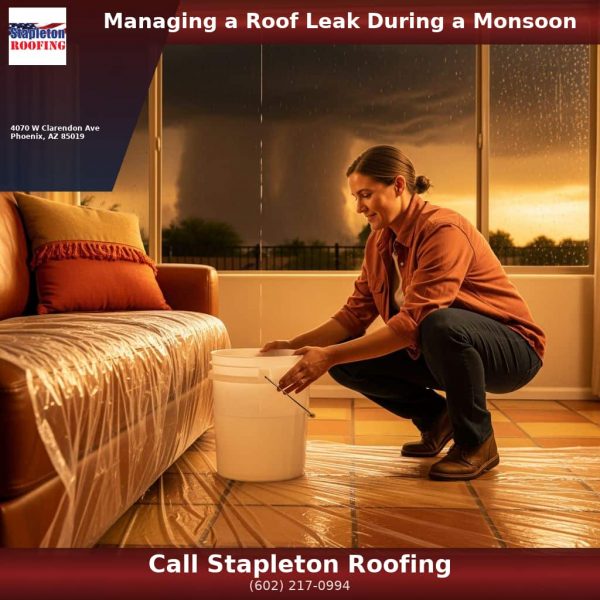
Phoenix homeowner placing bucket under ceiling leak during monsoon storm

What to Do When Your Roof Starts Leaking During a Monsoon Storm in Phoenix

Key Takeaways:

  • If your roof is actively leaking during a Phoenix monsoon, your first priority is interior containment and documentation — not exterior repair.
  • Phoenix monsoon leaks have specific causes (flashing separation, displaced tile caps, drain overload) that differ from typical rain-climate leaks and require specialized diagnosis.
  • After the storm passes, scheduling a professional post-storm inspection is the single most important step to prevent hidden structural damage from compounding.

Water is dripping through your ceiling. Outside, the sky turned brown an hour ago, and now your living room is getting wet. Take a breath — this is one of the most common calls we receive every summer, and there is a clear, calm path forward.

Here is exactly what to do, step by step, from the moment you notice the leak to the morning after the storm clears.

Step One: Contain the Damage Right Now

Your goal in the next ten minutes is simple — protect the interior of your home from as much secondary water damage as possible.

Start with these actions immediately:

  • Place buckets or large bowls directly under any active drip points.
  • Lay old towels or folded blankets around the base of buckets to absorb splashes and overflows.
  • Run plastic sheeting (painters’ tarps work perfectly) under and around the wet area to protect flooring, subfloor, and furniture.
  • Move electronics, important documents, and anything irreplaceable out of the affected zone.

One thing many Phoenix homeowners do not realize is that water rarely drips straight down from the entry point. In monsoon conditions, wind-driven rain often enters through a roof penetration at an angle and then travels along a rafter or truss before falling. So if the drip point is in one corner of the room, the actual roof entry point may be several feet away. Do not assume the ceiling drip tells you exactly where the problem is.

Now, here is what NOT to do during an active storm:

  • Do not go onto the roof. Period. A Phoenix monsoon produces sustained winds that can exceed 60 mph, with microbursts pushing far higher. Wet tiles and wet flat-roof membrane surfaces are dangerously slippery even in calm conditions.
  • Do not poke, prod, or puncture saturated drywall to “help it drain.” This spreads damage, collapses the wet panel, and creates a much larger remediation job.
  • Do not immediately run fans or turn on your HVAC blower in the affected area. If insulation above the ceiling plane is saturated, forcing airflow before the source is identified can push moisture deeper into the structure.

Document Everything Before You Clean Up

Before you move a single towel or touch the ceiling, take photos and video. This step costs you nothing and significantly protects your insurance claim.

Walk through the affected area and document:

  • The active drip or water intrusion point on the ceiling
  • Any staining, bulging, or bubbling drywall
  • Water on the floor, on furniture, or on electronics
  • Your containment setup (this actually shows the adjuster the extent of the event)
  • A timestamp — your phone automatically records this, but double-check

Call your homeowner’s insurance carrier as soon as you safely can. In Arizona, storm-related roof leaks are typically covered under the windstorm or sudden-and-accidental-damage provisions of a standard policy — but the documentation timeline matters. Most carriers want initial notice within 24 to 72 hours of the event.

Why Phoenix Roofs Leak During Monsoon Storms Specifically

Not all roof leaks come from the same place, and a monsoon leak in Phoenix has a very specific set of causes that differ from those of normal rainfall elsewhere. Understanding them helps you communicate clearly with your roofer and your insurance adjuster.

Flashing separation under wind-driven rain is the most frequent culprit. Flashing is the metal seal installed at every roof penetration — chimneys, vents, skylights, parapet walls. Phoenix summers are brutally hot, and that heat expands and contracts metal flashing repeatedly over months. By the time monsoon season arrives in July and August, that cyclical stress has often created hairline separations. Standard rainfall would never expose them. But monsoon wind-driven rain, striking the roof at 30 to 45 degrees, forces water directly into those gaps.

Displaced tile caps are the second major cause, especially on the concrete and clay tile roofs that are dominant across the Valley. A microburst — a localized, short-duration downburst that is a signature feature of Arizona monsoons — can produce gusts strong enough to shift the ridge caps or hip caps that sit at the peaks and angles of a tile roof. Once even one cap shifts, water channels directly under it.

Drainage valley overload happens because Phoenix is a monsoon climate — dry for most of the year, then hit with high-intensity, short-duration rainfall. The National Weather Service documents rainfall rates of one inch per hour or more during strong monsoon cells. Gutters, valleys, and drainage channels designed for typical Arizona precipitation can become overwhelmed in minutes. When water backs up in a valley, it rises above the flashing and infiltrates under the roofing material.

Flat-roof ponding from blocked scuppers and drains is the fourth major failure point, and it is particularly common on the low-slope or flat commercial-style roofs found throughout central Phoenix and on many Scottsdale and Tempe homes built in the mid-century modern tradition. Pre-storm debris — cottonwood puffballs, dust, leaf material, pigeon nesting material — partially blocks a drain or scupper. The monsoon then drops two inches of rain in 90 minutes, and with nowhere for that water to go, it ponds, finds a low point in the membrane, and enters the building.

What Happens After the Storm: The Post-Storm Inspection

Once the storm passes and conditions are safe, a professional post-storm inspection is the most important action you can take. This is not a sales pitch — it is a structural reality. What you see on the interior (a damp ceiling, a single drip point) almost never tells the full story of what happened on the roof.

A qualified post-storm roof inspection in Phoenix covers:

  • Walking the entire roof surface to identify displaced, cracked, or missing tiles
  • Checking every piece of flashing at penetrations, parapet walls, and valleys
  • Inspecting scuppers, drains, and gutters for damage and blockage
  • Identifying any areas of membrane damage on flat or low-slope sections
  • Looking for granule loss or impact marks from monsoon hail, which can compromise shingle integrity without being immediately visible

At Stapleton Roofing Company, we understand that after a major monsoon event, every homeowner in the Valley needs help simultaneously. We prioritize active-leak customers first, then work through the post-storm inspection queue as quickly as conditions allow. In 2026, the monsoon season has already produced several significant storm events across the Phoenix metro area, and our team moves with urgency because we know that a slow response means more interior damage, more mold risk, and more expensive repairs down the road.

When you call us after a monsoon event, here is what to expect: a live person answers, we gather information about the severity of the leak and any interior damage, and we schedule you for the earliest available inspection slot — prioritizing homes with active water intrusion into living spaces.

We handle the inspection documentation in a format that aligns with Arizona insurance adjusters’ needs, making the claims process significantly smoother for you.

The Next Step Is Simple

You do not need to figure out what caused the leak or decide how to fix it right now. That is our job. Your job right now is containment, documentation, and getting a qualified roofing professional on-site as soon as the storm allows.

If your roof leaked during this storm — or even if you are not sure and just want confirmation that everything is sealed heading into the rest of the monsoon season — schedule a post-storm inspection with Stapleton Roofing Company. We have seen every variation of Phoenix monsoon roof damage, and we will give you a straight, honest assessment with no pressure and no guesswork.

Frequently Asked Questions About Managing Roof Leak in Monsoon

Can I go up to my roof to check for damage while it is still raining?

No — and this applies even to experienced roofers. Active monsoon conditions involve wind, lightning, and slippery wet surfaces. The safest and most responsible action is to stay inside, contain any interior water intrusion, and document the damage. A professional inspection should happen only after the storm has fully passed and wind conditions are safe.

Most standard Arizona homeowner’s insurance policies cover sudden and accidental storm damage, including wind-driven rain and hail that cause roof leaks. However, coverage depends on the specific policy language, and gradual deterioration (pre-existing damage) may not be covered. Document everything immediately and contact your carrier within their notice window — usually 24 to 72 hours.

The sooner, the better — ideally within 48 to 72 hours of the storm. Exposed areas can absorb additional moisture if monsoon activity continues, which is common during the July–September season in Arizona. Delayed inspections also complicate insurance claims, since adjusters have more difficulty distinguishing fresh storm damage from pre-existing wear.

A microburst is a sudden, intense downburst of air that produces extremely high localized wind speeds — sometimes exceeding 100 mph in severe cases. They are a signature weather event of the Arizona monsoon season. Even roofs in good overall condition can suffer from displaced tiles, shifted flashing, or damaged ridge caps due to a direct microburst, which is why post-storm inspections matter even when the interior appears dry.

Signs that your flat or low-slope roof may be vulnerable include visible debris accumulation around drains and scuppers, standing water visible from a window or second floor, and previous slow-draining episodes after heavy rain. The best preventive step is a pre-monsoon inspection and drain clearing before the season begins in July.

Sources

  1. Arizona Monsoon rainfall intensity and storm characteristics — National Weather Service Phoenix Forecast Office: https://www.weather.gov/psr/Monsoon
  2. Homeowner insurance claim documentation best practices and storm coverage provisions — Arizona Department of Insurance and Financial Institutions: https://difi.az.gov/consumers/home-insurance
  3. Microburst definition and monsoon wind event characteristics — National Oceanic and Atmospheric Administration (NOAA): https://www.noaa.gov/education/resource-collections/weather-atmosphere/thunderstorms

Why Trust Stapleton Roofing Company

stapleton roofing crew

Stapleton Roofing Company is a family-owned and locally operated roofing contractor serving homeowners and businesses across Arizona. With more than 40 years of experience, we have earned a reputation as one of the most trusted and respected names in the roofing industry. Our team of licensed, bonded, and insured professionals provides comprehensive roofing services designed for Arizona’s demanding climate—from the intense desert sun to seasonal monsoon rains.

As leading Arizona roof contractors, our mission is simple: deliver honest service, unmatched workmanship, and roofs that stand the test of time. Every project we complete reflects our values—integrity, quality, and safety—and our dedication to customer satisfaction has made us the first choice for thousands of homeowners and businesses statewide.

Our Roofing Services Include:

  • Roof Repair: Leak detection, tile replacement, storm damage repair, and preventative maintenance.
  • Roof Replacement: Full tear-off and installation for shingle, tile, foam, and flat roofing systems.
  • Roof Inspections: Certified inspections for real estate, insurance, and property management.
  • Commercial Roofing: TPO, foam, and flat roofing systems designed for durability and energy efficiency.
  • Residential Roofing: Tile, shingle, and foam roof systems customized for Arizona homes.
  • Roof Coatings & Restoration: Energy-efficient roof coatings that extend the lifespan of your roof.

From our office in Phoenix, Stapleton Roofing Company proudly serves customers across the Greater Phoenix Metro area, including Scottsdale, Glendale, Mesa, Chandler, Surprise, Avondale, Goodyear, Paradise Valley, Cave Creek, Sun City West, and Tempe.

Our team uses only high-quality materials from trusted manufacturers, ensuring that every roofing system we install is built to last and backed by solid warranties. From minor residential repairs to large-scale commercial projects, we approach every job with precision, professionalism, and a no-leak guarantee for the warranty period in your contract.

As active members of the Arizona Roofing Contractors Association (ARCA) and accredited by the Better Business Bureau (BBB), Stapleton Roofing Company continues to set the standard for excellence in the Arizona roofing industry.

Why Homeowners & Businesses Trust Stapleton Roofing Company

  • Family-Owned and Operated
  • Licensed, Bonded, and Insured (ROC #269773)
  • Free Roof Inspections and Honest Estimates
  • Daily Site Cleanup and Safety Protocols
  • Decades of Proven Experience with Arizona Roofs

Business Locations:

Stapleton Roofing Company – Phoenix, AZ
Serving Central Phoenix, Scottsdale, Tempe, Chandler, and Mesa

Stapleton Roofing Company – West Valley Service Area
Serving Peoria, Glendale, Surprise, Avondale, Goodyear, and the West Valley

Facebook
Twitter
LinkedIn
Tumblr
Reddit

Get a Free Roofing Estimate from Stapleton

Ready to secure your home or business with expert roofing services? Contact Stapleton Roofing today for a free, no-obligation estimate on residential or commercial roofing, and ensure your property is protected by the best.

Leave a Reply

Your email address will not be published. Required fields are marked *