When Should You Recoat a Foam Roof in Phoenix?

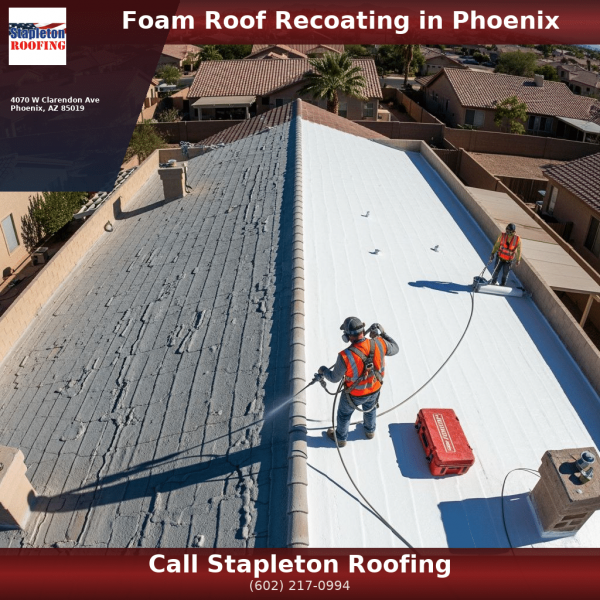
Foam roof recoating in a residential flat roof Phoenix Arizona

Foam Roof Recoating in Phoenix: When It’s Time and What to Expect

Key Takeaways:

  • Phoenix’s extreme UV radiation and monsoon thermal shock degrade foam roof coatings faster than manufacturer timelines suggest — recoating intervals should be condition-based, not calendar-based.
  • Visual signs like chalking, crazing, loss of reflectivity, and exposed foam substrate indicate your Phoenix foam roof needs attention before water intrusion begins.
  • Proper recoating by a qualified contractor extends your foam system’s life by 10 or more years — and understanding the process helps you make the right call between recoating, partial repair, or full replacement.

Your spray polyurethane foam roof was designed to last — but only if its protective coating stays intact. That coating is everything. Without it, UV radiation begins attacking the foam itself within days. In Phoenix, where the sun is relentless, and monsoon storms deliver violent thermal cycling, the stakes are higher than almost anywhere else in the country.

The question most Phoenix homeowners ask is simple: “How often do I need to recoat?” The honest answer is more nuanced: it depends on what your roof looks like right now, not just how many years have passed since the last application.

Why Phoenix Accelerates Coating Degradation

Most manufacturer literature quotes a recoating interval of seven to ten years. That benchmark assumes average U.S. climate conditions. Phoenix is not average.

The Valley receives more than 300 clear-sky days annually, and its solar angle of incidence drives UV exposure that breaks down elastomeric coatings at a significantly faster rate than in northern or coastal climates. The coating’s reflective pigments — the compounds that both protect the foam and keep your building cooler — oxidize under sustained UV bombardment. What starts as a bright white surface slowly turns chalky gray, losing its ability to reflect radiant heat.

Then the monsoons arrive. Afternoon temperatures can shift 30 to 40 degrees within hours as storms roll in from the southeast. That thermal shock causes the coating layer to expand and contract repeatedly. Over time, this cycling opens micro-fractures in the surface — a phenomenon called crazing — that eventually allows moisture to reach the foam substrate beneath.

The result: a roof that may look fine from the ground but is quietly failing where it matters most. For Phoenix properties, a condition-based inspection every three to four years is a more responsible standard than relying solely on manufacturer timelines.

Visual Signs Your Foam Roof Needs Recoating

You don’t need to climb onto your roof to start looking for warning signs, though a close-up inspection is always the definitive answer. Here are the four most telling indicators.

Chalking and surface discoloration. Run your hand across the coating surface. A white or gray chalky residue transferring to your palm signals advanced UV oxidation. The coating’s reflective capacity has diminished, meaning your building is absorbing more heat and the foam is receiving less protection.

Surface crazing. Look for a network of fine cracks in the coating layer — similar in appearance to the pattern on aged ceramic glaze. Crazing is the early-stage failure mode that precedes coating delamination. At this point, recoating is still the right call, but delaying moves you toward a more expensive repair.

Loss of reflectivity. A properly coated foam roof should appear bright white and slightly glossy. If your roof looks dull, off-white, or visibly darker in patches, the titanium dioxide pigment that drives solar reflectance has degraded. In Phoenix’s climate, this alone justifies an inspection — even if the timeline “isn’t due yet.”

Exposed foam substrate. If you can see the tan or yellow-orange foam material at any location — around penetrations, at seams, or in field areas — the coating has failed at those points. Exposed foam absorbs UV and moisture rapidly. This is the stage at which partial repair is often necessary before a full recoat can be applied effectively.

The Recoating Process: What to Expect

Understanding each phase of the process removes the guesswork and helps you evaluate any contractor’s proposal.

Phase one is inspection and documentation. A thorough technician walks the entire roof surface, mapping coating thickness with a gauge, probing suspect areas for soft spots (which indicate moisture-compromised foam), and photographing failure zones. This assessment drives the entire project scope. Skipping it — or skipping it mentally — is how recoats get applied over substrates that aren’t ready.

Phase two is surface preparation. The existing surface must be cleaned of chalk, debris, and biological growth using pressure washing or chemical treatment, depending on the condition. Any areas of delaminated coating are mechanically removed. Damaged or moisture-compromised foam sections are cut out and replaced with fresh material before the new coating goes down.

Phase three is coating application. Most quality recoating systems apply at least two coats — a base coat for adhesion and a finish coat for reflectivity and UV protection — to achieve a total dry film thickness consistent with the specification. In Phoenix, applying a thicker coating system than the minimum spec is a reasonable investment, given the UV load the surface will face.

The whole process on a typical residential foam roof takes one to two days. Disruption is minimal: the coating materials off-gas during application, so ventilation matters, but occupants generally do not need to vacate. Commercial properties may have specific access or business-hours considerations worth discussing with your contractor in advance.

Recoat, Repair, or Replace?

This is the decision that matters most, and it should be based on the foam substrate’s condition — not on cost avoidance or convenience.

Recoating is the right call when the foam substrate is sound, moisture readings are dry, and the failure is isolated to the coating layer. Done correctly, a full recoat adds 10 or more years to your foam system’s service life. Stapleton Roofing backs qualified recoating work with a no-leak guarantee for the warranty period in your contract, because a properly prepped and applied recoat is a reliable, long-term outcome — not a patch.

Partial repair becomes necessary when isolated foam sections have been compromised by moisture intrusion or physical damage. The damaged material is removed, new foam is applied, and the recoat proceeds over a sound substrate.

Full replacement is warranted when moisture damage is widespread across the roof field, the foam substrate has structurally degraded, or the existing system has multiple prior recoat layers that have built up beyond what a new coat can effectively bond to. A skilled roof inspector can identify this condition before you commit to recoating — which is exactly why inspection comes first.

In 2026, Phoenix property owners who treat their foam roof as a condition-monitored system — rather than a set-it-and-forget-it product — consistently get the most years out of their investment.

Frequently Asked Questions About Foam Roof Recoating in Phoenix

How often should a foam roof be recoated in Arizona?

There is no single correct interval. In Phoenix’s climate, the coating should be inspected every three to four years, and recoating should occur when visual signs of degradation — chalking, crazing, loss of reflectivity, or exposed foam — are present. Relying solely on a manufacturer’s seven-to-ten-year timeline without visual inspection can lead to foam damage that makes recoating alone insufficient.

Delayed recoating allows UV radiation and moisture to directly attack the foam substrate. Foam absorbs water when its coating fails, which leads to structural softening, blistering, and eventually the need for partial or full replacement. What could have been a straightforward recoating project becomes a significantly more expensive repair once the foam itself is compromised.

Most residential foam roof recoating projects take one to two days from surface prep through final coat application. Larger commercial roofs may require additional time. Weather windows matter in Phoenix — monsoon season scheduling and extreme midsummer heat can affect application timing and curing, so plan projects during spring or fall when possible.

Technically, coating materials are available through distribution channels, but proper application requires understanding dry film thickness requirements, substrate condition assessment, and correct material mixing ratios. An improperly applied recoat — too thin, applied over a compromised substrate, or without adequate surface prep — can fail within one to two seasons, costing more than professional installation would. For a roof system that protects your home, a professional application with a workmanship guarantee is the reliable path.

Reflective roof coatings applied to foam systems can reduce cooling loads, and Arizona utility companies have periodically offered rebates for qualifying cool roof upgrades. The specifics of available programs change year to year, so check with your local utility provider or the U.S. Department of Energy’s energy-saving resources for current eligibility requirements before scheduling your project.

Why Trust Stapleton Roofing Company

stapleton roofing crew

Stapleton Roofing Company is a family-owned and locally operated roofing contractor serving homeowners and businesses across Arizona. With more than 40 years of experience, we have earned a reputation as one of the most trusted and respected names in the roofing industry. Our team of licensed, bonded, and insured professionals provides comprehensive roofing services designed for Arizona’s demanding climate—from the intense desert sun to seasonal monsoon rains.

As leading Arizona roof contractors, our mission is simple: deliver honest service, unmatched workmanship, and roofs that stand the test of time. Every project we complete reflects our values—integrity, quality, and safety—and our dedication to customer satisfaction has made us the first choice for thousands of homeowners and businesses statewide.

Our Roofing Services Include:

  • Roof Repair: Leak detection, tile replacement, storm damage repair, and preventative maintenance.
  • Roof Replacement: Full tear-off and installation for shingle, tile, foam, and flat roofing systems.
  • Roof Inspections: Certified inspections for real estate, insurance, and property management.
  • Commercial Roofing: TPO, foam, and flat roofing systems designed for durability and energy efficiency.
  • Residential Roofing: Tile, shingle, and foam roof systems customized for Arizona homes.
  • Roof Coatings & Restoration: Energy-efficient roof coatings that extend the lifespan of your roof.

From our office in Phoenix, Stapleton Roofing Company proudly serves customers across the Greater Phoenix Metro area, including Scottsdale, Glendale, Mesa, Chandler, Surprise, Avondale, Goodyear, Paradise Valley, Cave Creek, Sun City West, and Tempe.

Our team uses only high-quality materials from trusted manufacturers, ensuring that every roofing system we install is built to last and backed by solid warranties. From minor residential repairs to large-scale commercial projects, we approach every job with precision, professionalism, and a no-leak guarantee for the warranty period in your contract.

As active members of the Arizona Roofing Contractors Association (ARCA) and accredited by the Better Business Bureau (BBB), Stapleton Roofing Company continues to set the standard for excellence in the Arizona roofing industry.

Why Homeowners & Businesses Trust Stapleton Roofing Company

  • Family-Owned and Operated
  • Licensed, Bonded, and Insured (ROC #269773)
  • Free Roof Inspections and Honest Estimates
  • Daily Site Cleanup and Safety Protocols
  • Decades of Proven Experience with Arizona Roofs

Business Locations:

Stapleton Roofing Company – Phoenix, AZ
Serving Central Phoenix, Scottsdale, Tempe, Chandler, and Mesa

Stapleton Roofing Company – West Valley Service Area
Serving Peoria, Glendale, Surprise, Avondale, Goodyear, and the West Valley

Facebook
Twitter
LinkedIn
Tumblr
Reddit

Get a Free Roofing Estimate from Stapleton

Ready to secure your home or business with expert roofing services? Contact Stapleton Roofing today for a free, no-obligation estimate on residential or commercial roofing, and ensure your property is protected by the best.

Leave a Reply

Your email address will not be published. Required fields are marked *