How Long Do Asphalt Shingles Last in Arizona?

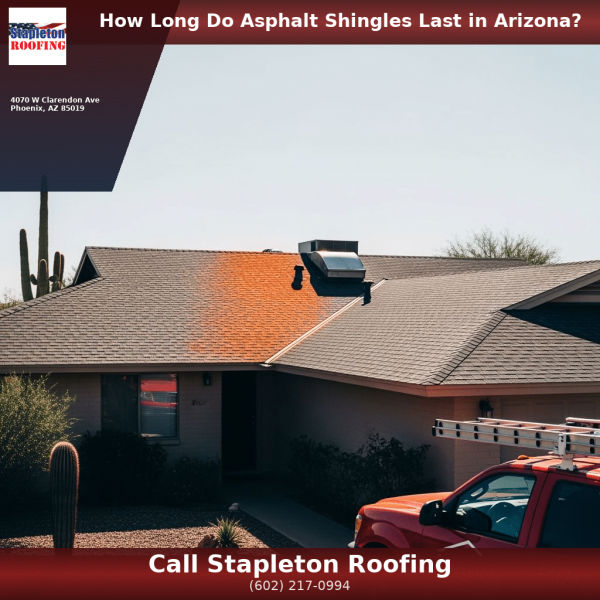
Asphalt shingle roof under intense sunlight showing UV exposure

How Long Do Asphalt Shingles Last in Arizona? (What Phoenix Homeowners Need to Know)

Key Takeaways:

  • Arizona’s extreme heat, UV intensity, and monsoon thermal cycling can cut a standard 25- 30-year shingle warranty’s practical lifespan down to 15-20 years in Phoenix.
  • Warranty coverage applies to manufacturing defects, not climate-accelerated wear — so “25-year shingles” doesn’t mean 25 years of reliable performance in Arizona conditions.
  • If you’re seeing heavy granule loss, surface cracking, or curling edges, schedule a professional inspection before the next monsoon season adds water intrusion to the problem.

Your roofer installed 25-year architectural shingles. The warranty paperwork is in a drawer somewhere. But every summer, Phoenix delivers another 100-plus-day stretch of temperatures over 100°F, and you start to wonder: Does that warranty actually mean anything here?

The honest answer is more nuanced than most homeowners expect. Understanding the lifespan of asphalt shingle roofs in Arizona conditions and comparing it with what the warranty technically promises can save you from a very expensive surprise.

How Arizona’s Climate Attacks Asphalt Shingles

Asphalt shingles were engineered for durability across a broad range of climates. However, Phoenix’s environment combines multiple damaging forces, accelerating degradation well beyond national averages.

UV Exposure and Granule Loss

Phoenix averages more than 300 sunny days per year. That sustained UV bombardment breaks down the asphalt binder that holds shingles together. The ceramic granules embedded in the surface — which reflect heat and protect the asphalt layer underneath — gradually dislodge and wash into your gutters.

On a dark-colored shingle roof, surface temperatures can reach 165°F during a Phoenix summer afternoon. At those temperatures, the oils within the asphalt literally cook out over time, leaving the shingle brittle and prone to cracking well before a northern-climate roof would show similar wear.

Thermal Cycling Stress

Arizona’s days are brutally hot. But monsoon season — typically July through September — introduces a different kind of stress. A haboob or microburst can drop surface temperatures by 30 to 40 degrees in minutes. That rapid expansion-and-contraction cycle, repeated dozens of times each summer, creates microscopic cracks in the asphalt. Over several years, those microcracks grow, allowing moisture to penetrate during the next rain event.

Wind Events

Haboobs and microbursts don’t just bring temperature drops — they bring wind. Phoenix routinely sees microburst wind speeds exceeding 60 mph during storm events. Shingles with edges that have already begun curling from UV exposure are particularly vulnerable. A single storm can lift, crack, or tear shingles that were borderline to begin with, turning a slow degradation problem into an immediate leak.

What “25-Year Shingles” Actually Means in Phoenix

This is the conversation most homeowners never have with their roofer, and it matters.

A 25-year shingle warranty covers manufacturing defects — premature cracking due to a defect in the product, granule adhesion failures caused by a production flaw, that sort of thing. What it does not cover is climate-accelerated wear. When Phoenix’s heat and UV exposure age your shingles faster than the warranty timeline assumes, that wear falls squarely on you.

Manufacturers typically test shingles against ASTM standards developed for generalized climate conditions. Those conditions do not replicate Phoenix’s combination of extreme UV intensity, sustained high heat, and monsoon thermal cycling.

The practical result: standard 30-year architectural shingles in a northern climate like Minnesota or Ohio may genuinely reach 25 to 30 years of reliable performance. The same product installed in Phoenix is realistically rated for 15 to 20 years under normal conditions. Some roofs fall short of 15 years if they face consistently dark shingle color, poor attic ventilation, or repeated storm damage.

In 2026, more manufacturers will offer “impact-resistant” and “cool roof” shingle lines specifically designed for southwestern climates. These products use modified asphalt formulations and reflective granules to reduce surface temperatures. They carry a premium price, but they genuinely extend the realistic service life in Arizona conditions. Ask your roofing contractor specifically about cool roof-rated products and their Energy Star certifications before choosing a shingle for a Phoenix replacement.

Signs Your Phoenix Shingle Roof Is Nearing End-of-Life

Knowing the warning signs means you can make a planned, budgeted replacement decision rather than an emergency one after a water stain appears on the ceiling.

Heavy Granule Accumulation in Gutters

Some granule loss is normal throughout a shingle roof’s life. But if you’re cleaning your gutters and finding thick, sand-like deposits of granules — especially after storms — that’s a sign the protective layer is thinning faster than it should. Once significant granule coverage is lost, the asphalt beneath is exposed directly to UV, and deterioration accelerates sharply.

Visible Surface Cracking

Walk around your home and look at your roof from ground level. If shingles appear dry, map-cracked, or show visible fissures across the surface, the asphalt binder has likely lost too much flexibility to shed water reliably. This condition cannot be corrected by patching — the underlying material is compromised.

Cupping or Curling Edges

Shingle edges that curl upward (cupping) or downward (clawing) are responding to moisture imbalance and heat-driven material stress. In Phoenix, this typically indicates that a roof has reached the end of its practical service life. Curled edges create gaps where wind can grab shingles, and where water can run beneath the surface layer during monsoon events.

Repair or Replace? Making the Right Call

Not every shingle problem requires a full roof replacement. If your roof is under 12 years old and the damage is isolated — storm-related shingle loss in one section, for example — a targeted repair often makes sense. A skilled roofer can match existing architectural shingles reasonably well and restore watertight integrity without the cost of a full tear-off.

However, if granule loss is widespread, cracking is visible across multiple roof planes, or curling is present on a large percentage of shingles, repair becomes throwing money at a problem that will return within a year or two. At that point, a full replacement with better-suited materials is the more cost-effective long-term decision.

Stapleton Roofing Company offers free inspections that assess granule coverage, check flashings and valleys, evaluate attic ventilation (a major factor in shingle longevity), and give you an honest picture of where your roof stands — without pressure. The inspection covers everything a homeowner would want to know before deciding between repair and full replacement.

Frequently Asked Questions About Asphalt Shingle Roof Lifespan

How long do asphalt shingles last in Arizona heat compared to other states?

Standard architectural shingles typically last 25-30 years in northern or midwestern climates. In Arizona, the realistic lifespan is 15-20 years due to intense UV exposure, extreme surface temperatures, and monsoon thermal cycling. The same product, installed the same way, simply ages faster under Phoenix’s conditions.

Generally, no. Manufacturer warranties on asphalt shingles cover defects in materials or workmanship, not climate-accelerated wear. Heat-driven granule loss and UV degradation in Phoenix fall outside standard warranty coverage. Always read your specific warranty terms and ask your roofer to explain what is and isn’t covered before installation.

Lighter-colored shingles or those with reflective “cool roof” granules tend to have lower surface temperatures than dark shingles, which can reduce thermal stress and slow UV degradation. However, color is just one factor — granule quality, asphalt formulation, and attic ventilation all significantly affect longevity in Arizona’s climate.

Isolated storm damage on a roof under 12 years old is often a repair situation. Widespread granule loss, surface cracking across multiple areas, or curling edges typically indicate end-of-life conditions where repair costs would recur quickly. A professional inspection provides an objective assessment based on the actual condition of your roof.

Concrete and clay tile roofs are well-suited to Arizona’s climate, with typical lifespans of 40-50 years in Phoenix. They are heavier and more expensive upfront, but their resistance to UV degradation and thermal cycling makes them a compelling long-term value for many homeowners. The right choice depends on your budget, structural capacity, and how long you plan to stay in the home.

Why Trust Stapleton Roofing Company

stapleton roofing crew

Stapleton Roofing Company is a family-owned and locally operated roofing contractor serving homeowners and businesses across Arizona. With more than 40 years of experience, we have earned a reputation as one of the most trusted and respected names in the roofing industry. Our team of licensed, bonded, and insured professionals provides comprehensive roofing services designed for Arizona’s demanding climate—from the intense desert sun to seasonal monsoon rains.

As leading Arizona roof contractors, our mission is simple: deliver honest service, unmatched workmanship, and roofs that stand the test of time. Every project we complete reflects our values—integrity, quality, and safety—and our dedication to customer satisfaction has made us the first choice for thousands of homeowners and businesses statewide.

Our Roofing Services Include:

  • Roof Repair: Leak detection, tile replacement, storm damage repair, and preventative maintenance.
  • Roof Replacement: Full tear-off and installation for shingle, tile, foam, and flat roofing systems.
  • Roof Inspections: Certified inspections for real estate, insurance, and property management.
  • Commercial Roofing: TPO, foam, and flat roofing systems designed for durability and energy efficiency.
  • Residential Roofing: Tile, shingle, and foam roof systems customized for Arizona homes.
  • Roof Coatings & Restoration: Energy-efficient roof coatings that extend the lifespan of your roof.

From our office in Phoenix, Stapleton Roofing Company proudly serves customers across the Greater Phoenix Metro area, including Scottsdale, Glendale, Mesa, Chandler, Surprise, Avondale, Goodyear, Paradise Valley, Cave Creek, Sun City West, and Tempe.

Our team uses only high-quality materials from trusted manufacturers, ensuring that every roofing system we install is built to last and backed by solid warranties. From minor residential repairs to large-scale commercial projects, we approach every job with precision, professionalism, and a no-leak guarantee for the warranty period in your contract.

As active members of the Arizona Roofing Contractors Association (ARCA) and accredited by the Better Business Bureau (BBB), Stapleton Roofing Company continues to set the standard for excellence in the Arizona roofing industry.

Why Homeowners & Businesses Trust Stapleton Roofing Company

  • Family-Owned and Operated
  • Licensed, Bonded, and Insured (ROC #269773)
  • Free Roof Inspections and Honest Estimates
  • Daily Site Cleanup and Safety Protocols
  • Decades of Proven Experience with Arizona Roofs

Business Locations:

Stapleton Roofing Company – Phoenix, AZ
Serving Central Phoenix, Scottsdale, Tempe, Chandler, and Mesa

Stapleton Roofing Company – West Valley Service Area
Serving Peoria, Glendale, Surprise, Avondale, Goodyear, and the West Valley

Facebook
Twitter
LinkedIn
Tumblr
Reddit

Get a Free Roofing Estimate from Stapleton

Ready to secure your home or business with expert roofing services? Contact Stapleton Roofing today for a free, no-obligation estimate on residential or commercial roofing, and ensure your property is protected by the best.

Leave a Reply

Your email address will not be published. Required fields are marked *